Letter C Outline: A Charming Embroidery Design for Meaningful Gifts
As an embroidery designer who’s developed hundreds of custom designs for baby boutiques, wedding studios, and Etsy shops over the past 12 years, I approach every new machine embroidery design with two questions: *Does it tell a story?* and *Will it hold up—both on fabric and in the customer’s heart?* When I first opened the Letter C Outline, I smiled—not because it’s flashy, but because it feels quietly intentional. It’s sweet without being saccharine, whimsical without sacrificing clarity, and clean enough to pair with linen napkins or organic cotton onesies. This isn’t just another alphabet file. It’s a versatile, emotionally resonant tool for makers who value authenticity in their handmade product.
A First Impression That Builds Trust
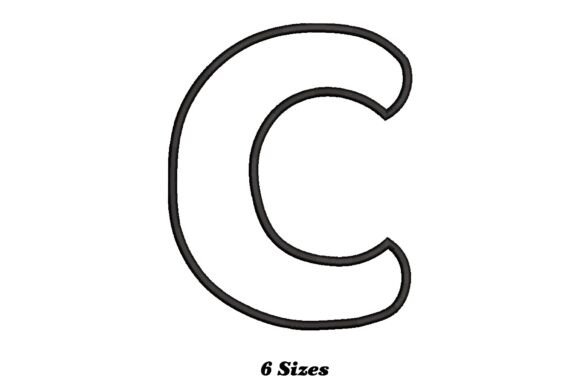
The Letter C Outline lands with gentle confidence. Its line weight is consistent but not rigid—there’s a subtle hand-drawn softness in the curves that reads as warm and human-made, not digitally sterile. It’s neither ultra-minimalist nor ornate; instead, it occupies that sweet spot between classic and modern—a quality that makes it ideal for School-themed keepsakes (think graduation towels or teacher appreciation gifts) and timeless nursery decor alike. Customers browsing your Etsy shop or local craft fair booth will instinctively sense its craftsmanship before they even read the description. That emotional resonance directly boosts perceived value—and in personalized gift markets, that feeling is worth more than extra stitches.
Where the Letter C Outline Shines—And Why It Sells
This design excels where personal meaning meets practical application. For baby embroidery, it anchors beautifully on organic cotton swaddles or muslin lovey corners—especially when paired with a monogrammed name or birth year. As a wedding gift, it adds quiet elegance to linen pillow covers or embroidered kitchen towels gifted to newlyweds (imagine “C” for Claire & Cameron, stitched in ivory thread on oatmeal linen). It also works wonderfully for family keepsakes: stitch it onto a quilt square alongside hand-stitched initials, or use it as a focal point on a custom tote bag for a school volunteer or PTA fundraiser.
Small shop owners and Etsy sellers will appreciate how effortlessly the Letter C Outline integrates into product photography. Its open, airy structure photographs cleanly—even on textured fabrics like terry cloth or woven cotton—and doesn’t compete with backgrounds or props. That clarity translates directly to buyer engagement: shoppers linger longer, imagine the item in their own home, and click “Add to Cart” with greater confidence.
Smart Pairings for Real-World Use Cases
- Baby embroidery: Ideal for onesies, burp cloths, and blanket embroidery—just avoid tight curves near shoulder seams where stretchy fabric may distort the outline.
- Wedding gift: Perfect for monogrammed towel sets or minimalist bridal party favors. Stitch it in matte cotton thread for a refined, tactile finish.
- Nursery decor: Works elegantly on canvas wall art, crib skirts, or wooden block accents—especially when layered under light fabric appliqué.
- Custom tote bags & aprons: Holds strong on medium-weight canvas and denim. Avoid placing it across high-stress seams unless reinforced with backing stabilizer.
- Craft fair products: Print a digital embroidery file mockup on kraft paper tags or hang it beside finished samples—it invites conversation and signals thoughtful curation.
Where to Use the Letter C Outline Thoughtfully
Like any well-designed embroidery file, the Letter C Outline rewards intentionality. Because it’s an outline—rather than a filled shape—it relies on clean stitch execution and fabric cooperation. On thick, plush towels, consider increasing stabilizer support to prevent puckering around the inner curve. On dark fabric, test thread color contrast carefully: a pale ecru may disappear, while a soft charcoal adds depth without heaviness. And while it’s lovely on lightweight knits, avoid using it on highly stretchy baby clothes unless you’ve tested seam placement and added cutaway stabilizer underneath.
Also keep in mind that delicate details—like the fine terminal of the “C”’s curve—can blur if stitch density is too low or hoop tension too loose. Always run a test on scrap fabric that matches your final product’s weight and texture. If you’re offering custom embroidery as a small shop product, include a note in your listing about recommended fabric types—transparency builds trust faster than any marketing copy.
Practical Notes Every Maker Should Check Before Stitching
Before adding the Letter C Outline to your production workflow—or listing it as part of a digital embroidery file bundle—take these steps:
- Confirm hoop size compatibility with your primary machines. Does it fit comfortably within your most-used hoop, or will it require re-hooping mid-stitch?
- Review stitch density. Too sparse, and the outline may look broken on textured surfaces; too dense, and it risks stiffness on soft baby items.
- Test stabilizer pairings: tear-away for stable wovens, cut-away for knits, and water-soluble for delicate linens or lace overlays.
- Compare light and dark fabric mockups side-by-side. What reads beautifully on ivory may vanish on navy—adjust thread colors accordingly.
- Check small details after stitching: zoom in on photos of your test run to verify crispness at the curve endpoints.
- Verify commercial licensing terms. If you’re selling finished products (not just the file), ensure your license permits commercial embroidery use—especially for school-branded or wedding-related applications.
Remember: the most successful personalized gift isn’t defined by complexity—it’s defined by connection. The Letter C Outline doesn’t shout. It invites. It fits naturally into life’s quiet milestones—first days, forever vows, daily rituals—and that’s exactly why it belongs in your embroidery library.