Retro Floral Teacher
First Impression: Whimsical Charm Meets Classroom Warmth
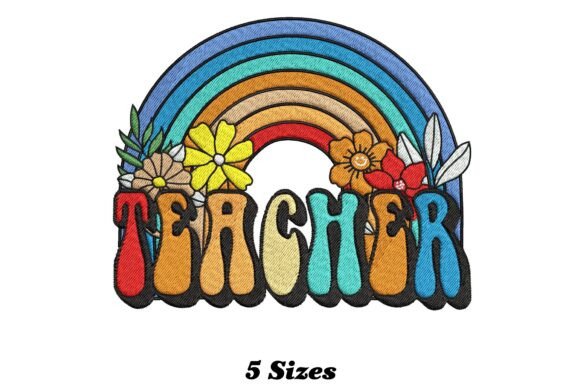
As an embroidery designer who’s prepped over 200 craft fair booths, my gut reaction to Retro Floral Teacher is immediate and positive: it’s playful, approachable, and quietly confident. The title alone evokes nostalgia without leaning into cliché—think 1970s botanical postcards meets chalkboard doodles, not cartoonish or overly sweet. It lands squarely in the “whimsical charm” zone: soft enough for tea towels and pillow covers, bold enough to hold attention on a tote bag at six feet. For School-themed handmade products, it avoids rigid academic tropes (no apples, no graduation caps) and instead offers warmth, personality, and subtle storytelling—exactly what draws buyers at local markets and Etsy shops.
Where It Shines: Craft Fair-Ready Product Pairings
Retro Floral Teacher thrives where handmade authenticity meets everyday utility. Here’s how it performs across high-turnover craft fair items:
- Tote bag design: A standout focal point when centered on natural canvas or oatmeal linen. Its balanced floral layout reads clearly from afar—no squinting needed. Ideal for teachers, homeschoolers, and education-adjacent creatives.
- Apron embroidery: Works beautifully above the pocket or along the waistband. The retro curves soften the apron’s utilitarian feel, elevating it from kitchen tool to giftable handmade product.
- Tea towel embroidery: Perfect scale for corner or lower-third placement. On textured terry or waffle weave, the design’s open spacing prevents stitch pile-up—critical for functional home decor.
- Embroidered patch: Translates cleanly into a sew-on or iron-on format. Its cohesive shape and moderate detail make it stable at 3–4 inches—ideal for backpacks, denim jackets, or student gift sets.
- Caps and fabric pouches: Use with caution. The design’s horizontal flow suits flat surfaces best; on curved cap fronts, test stitch density and letter legibility first. For small pouches (6" x 8"), scale down only to 3.5" wide—any smaller risks losing definition in the floral stems.
- Pillow covers and market bags: Strong visual anchor. Paired with solid-color linen or cotton duck, Retro Floral Teacher adds boutique-level polish without overwhelming the textile.
Selling Smarter: What Makes This Design Market-Ready
This isn’t just another machine embroidery design—it’s a conversation starter. At a crowded craft fair, Retro Floral Teacher stands out because it feels intentional, not generic. Buyers pause longer. They ask, “Is that for teachers?” “Did you draw this yourself?” That engagement boosts booth dwell time—and sales.
Photographically, it’s Etsy-listing friendly: clean lines, balanced negative space, and a color-agnostic structure (thread colors can shift from sage-and-cream to mustard-and-navy without breaking the mood). It scales well for printable mockups—no pixelation, no jagged edges—making digital embroidery file listings more trustworthy.
For batch production? Highly repeatable. No dense fill areas that bog down machines or require re-hooping mid-stitch. Moderate stitch density means consistent results across different embroidery machines and operator skill levels—key for small shop owners managing their own commercial embroidery workflow.
Careful-Use Notes: Protect Your Production & Reputation
Even charming designs have limits. Before cutting fabric or loading your hoop:
- Test Retro Floral Teacher on scrap fabric matching your final product—especially thick canvas, textured towels, or dark denim. Dense floral centers may sink or blur on heavy weaves.
- Avoid ultra-small applications (<3"). Tiny lettering or delicate petals lose clarity fast. If using on patches or keychains, confirm minimum legible size with your digitizer.
- On curved surfaces (caps, curved tote straps), check stitch alignment. Some retro flourishes may distort if not adjusted for surface tension.
- Thread contrast matters. On black or navy fabrics, use bright ecru, lemon yellow, or coral thread—not off-white—to preserve whimsy and readability.
- Stabilizer choice is non-negotiable. Use medium-weight cutaway for towels and bags; tear-away for lightweight cottons. Skipping this step risks puckering that undermines the handmade quality buyers pay for.
Designer-to-Designer: Your Pre-Production Checklist
Before your craft fair booth opens, run these checks:
- Verify hoop size compatibility—does Retro Floral Teacher fit comfortably in your most-used hoop without awkward repositioning?
- Review spacing between elements. Tight loops or overlapping stems may snag during stitching or wear.
- Create at least one real mockup—not just a digital preview. See how it drapes, how light hits the stitches, how it feels in hand.
- Compare thread colors across 3–4 fabric bases (light, medium, dark). What reads “retro” on ivory may read “muddy” on charcoal.
- Confirm commercial licensing status. As an Etsy seller or small shop owner, you need explicit permission to sell finished products—not just the digital embroidery file.
- Document your test runs. Note stabilizer type, thread brands, and machine settings. Replication is everything when scaling from 1 sample to 50 tote bags.
Final Thought: More Than a Design—It’s a Handmade Hook
Retro Floral Teacher doesn’t just decorate fabric—it invites connection. It signals care, creativity, and quiet confidence. In a sea of mass-produced school-themed goods, it gives your booth authenticity. It tells customers: *This was made for people who love teaching, learning, and the little joys in between.* That resonance—felt in person, trusted online, repeated across products—is why this embroidery file earns shelf space in your design assets, your Etsy shop, and your next craft fair display.